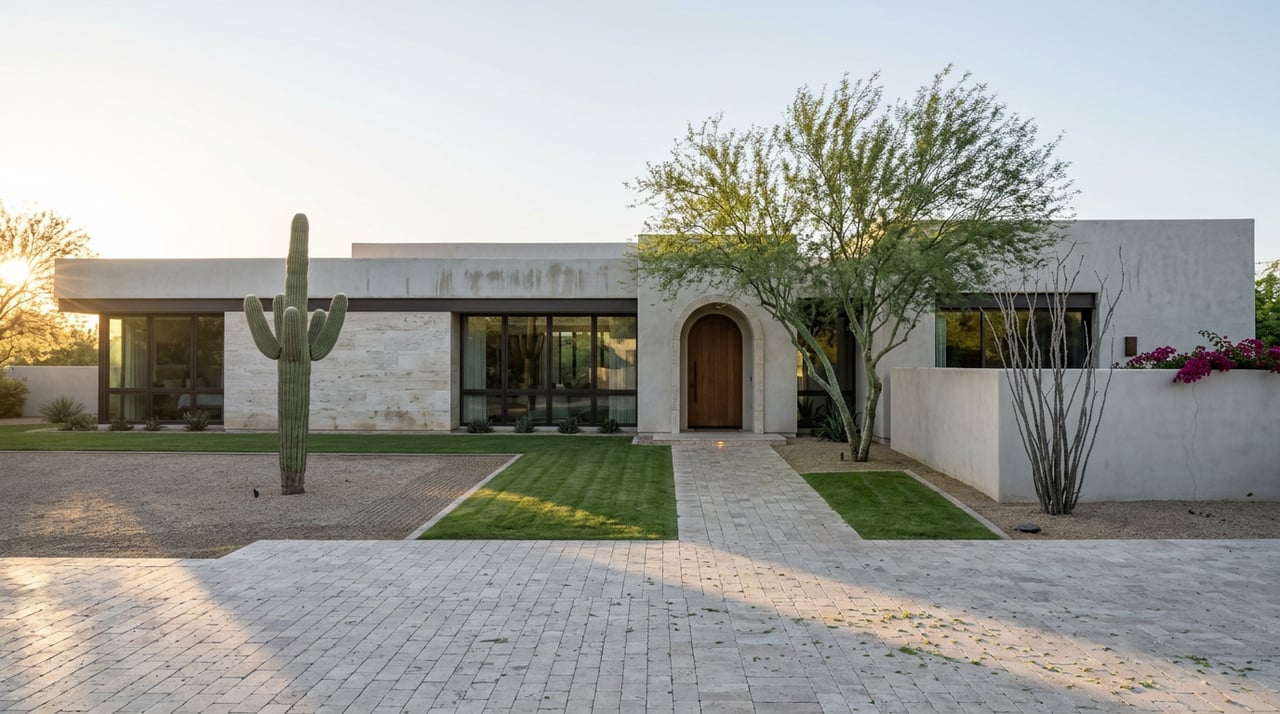
If you have ever compared two Paradise Valley area homes and wondered why one shows a much higher price per square foot than the other, you are asking the right question. That number can be useful, but in this market, it can also be easy to misread. When you know what is actually behind the math, you can make better pricing, buying, and selling decisions. Let’s dive in.
Start With the Right Paradise Valley
Before you read any price-per-square-foot number, make sure you are looking at the correct market. The Town of Paradise Valley is not the same as Paradise Valley Village, which is a Phoenix planning village in northeast Phoenix. The town itself specifically notes that the two should not be confused in its General Plan.
That distinction matters because the numbers are very different. In early 2026, the Town of Paradise Valley was roughly in the $922 to $953 per square foot range, while Paradise Valley Village was closer to $347 to $364 per square foot, based on Redfin market data for the town and Redfin market data for Paradise Valley Village.
If you blend those two areas together, the result is not very helpful. You would be comparing different housing stock, different land patterns, and very different pricing levels.
Current Market Snapshot
For the Town of Paradise Valley, Redfin reported a February 2026 median sale price of $6.2 million, a median sale price per square foot of $922, and 38 median days on market. Realtor.com reported a median sale price of $5.13 million, $953 per square foot, 378 active listings, and 74 median days on market, according to each platform’s own research and methodology.
For Paradise Valley Village, Redfin reported a February 2026 median sale price of $599,450 and $347 per square foot. Realtor.com reported a median listing price of $609,000 and $364 per square foot, based on the same Paradise Valley Village market page.
You may notice that the platforms do not match exactly. That is normal. Different sites use different methods, and even the type of number matters. For example, Zillow’s Home Value Index is based on monthly changes in property-level estimates, so it is not a direct substitute for sold-sale price-per-square-foot data.
What Price Per Square Foot Really Tells You
Price per square foot is a shortcut. It gives you a quick way to compare value across homes, but it is only a starting point. On its own, it does not tell you why a home trades where it does.
In a market like Paradise Valley, that matters a lot. A broad average can hide major differences in lot size, views, architecture, age, condition, and site placement. Two homes may both be in Paradise Valley, but buyers may value them very differently.
That is why professionals do not price a property by grabbing one townwide average and applying it blindly. They look at comparable sales and then adjust for the details that actually influence buyer behavior.
Why the Number Swings So Much
Lot Size Matters More Here
In Paradise Valley, land is a major part of the story. The town is primarily zoned for one residence per acre, with only limited areas for different residential densities, according to the town’s Residents Guide. That creates a market where site size and scarcity can have an outsized impact on pricing.
Local reporting has also noted that land prices doubled in Paradise Valley and Arcadia for parcels 2.5 acres and smaller. When land becomes more expensive, the price per square foot of the finished home can rise with it.
Views Can Create Huge Premiums
Not all square footage is valued equally. In Paradise Valley, view corridors tied to Camelback Mountain, Mummy Mountain, and the Phoenix Mountain Preserve can significantly shape value. The town identifies these as permanent visual resources in its Hillside Building Regulations update materials.
This helps explain why the upper end can stretch so far. Scottsdale REALTORS has reported that buyers once paid around $685 per square foot before COVID, while some homes now command more than $2,000 per square foot for Camelback Mountain views. That spread shows why a simple average can miss the mark.
Hillside and Flat-Land Homes Are Different
The setting of the home matters, too. The town’s hillside development area covers nearly 3 square miles, or about 20% of the town, and hillside applications increased from 24 in 2022 to 49 in 2024, according to the same town planning materials.
A hillside property may offer stronger views or a more dramatic setting, but it may also come with a different construction profile, approval process, and replacement cost. Those differences can influence both pricing and how buyers compare one home to another.
Architecture, Age, and Condition Matter
Paradise Valley includes a wide mix of housing, from older single-family homes to newly built custom estates. A townwide price-per-square-foot number blends all of that together. In practice, buyers do not treat a dated home and a recently renovated estate as equal just because the square footage is similar.
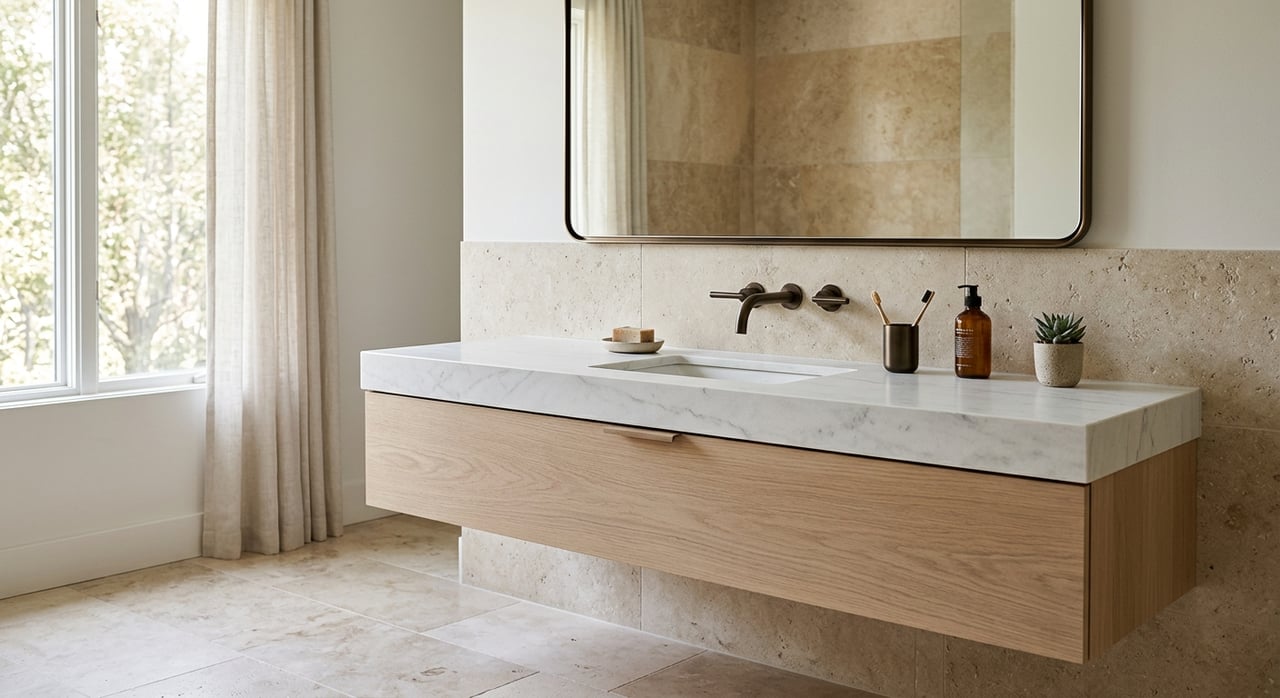
According to Fannie Mae’s property condition guidance, an updated home has been modified to meet current market expectations, while a remodeled home can include major structural changes or added square footage. A recently renovated property may even compete more like newer construction. That can support a higher number, but only if comparable sales support it.
How Appraisers and Advisors Read the Number
Comparable Sales Come First
Professionals do not rely on a citywide or townwide average alone. The Appraisal Institute’s guidance explains that the best comparable sales are the properties most similar in location, size, condition, and other features that buyers and sellers believe affect value.
Fannie Mae also requires market-supported adjustments for meaningful differences. So if one home has a stronger view, a larger lot, newer finishes, or a more desirable site placement, those differences should be considered instead of ignored.
Bigger Does Not Always Mean Lower
You may hear that larger homes usually have a lower price per square foot. Sometimes that is true, but not always. Fannie Mae’s appraisal guidance makes clear that size must be read in context, including whether a property is an over-improvement for its setting.
In other words, you cannot assume a larger home should automatically trade at a discount on a per-square-foot basis. The lot, design, utility, condition, and buyer demand for that specific product still matter.
Renovations Need Market Proof
A renovation may improve value, but it does not guarantee a return at any price level. In Paradise Valley, remodeling also involves local permitting, and hillside construction and remodeling require approval before a building permit is issued, according to the town’s Residents Guide.
That means the real value of an update is tied to both execution and market acceptance. Buyers may pay more for a well-designed, move-in-ready home, but the premium still has to line up with actual comparable sales.
Why Online Numbers Often Conflict
If you have checked multiple real estate sites, you have probably seen conflicting figures. That does not always mean one source is wrong. It often means the sources are measuring slightly different things, over different time periods, with different data sets.
For example, Redfin described the Town of Paradise Valley as somewhat competitive, while Realtor.com described it as a buyer’s market in February 2026. Those labels can be useful for broad context, but they are not a substitute for studying your exact property type and submarket.
A Better Way to Use Price Per Square Foot
If you are buying or selling in Paradise Valley, use price per square foot as a screening tool, not a final answer. It works best when you compare homes that are similar in the ways buyers actually care about.
That usually means controlling for:
- Location within the market
- Lot size
- View corridor
- Hillside versus flat-land placement
- Age of the home
- Level of renovation
- Overall condition and quality
- Architectural style and buyer appeal
When you narrow the comparison set, the number becomes far more useful. When you apply a broad average to a highly specific property, it becomes far less reliable.
What This Means for Buyers and Sellers
For buyers, the lesson is simple: do not reject a home just because its price per square foot looks high at first glance. If that home has stronger views, a better site, newer construction, or a more compelling design, the premium may be justified.
For sellers, the takeaway is just as important: a high average for Paradise Valley does not automatically mean your home should command that same figure. The market still looks closely at condition, location, lot, and presentation.
In a nuanced market, pricing strategy needs more than a headline metric. It needs context, discipline, and a close read on what buyers are actually paying for right now.
If you want help interpreting the numbers behind a specific property in Paradise Valley or Paradise Valley Village, connect with Adrian Heyman for a private consultation.
FAQs
Is Paradise Valley Village the same as the Town of Paradise Valley?
- No. Paradise Valley Village is a Phoenix planning village in northeast Phoenix, while the Town of Paradise Valley is a separate municipality with a much higher current price-per-square-foot range.
What is the current price per square foot in the Town of Paradise Valley?
- In early 2026, reported figures were roughly $922 per square foot on Redfin and $953 per square foot on Realtor.com, depending on the source and methodology.
What is the current price per square foot in Paradise Valley Village?
- In early 2026, reported figures were roughly $347 per square foot on Redfin and $364 per square foot on Realtor.com.
Why can two Paradise Valley homes have very different price per square foot numbers?
- Differences in lot size, views, hillside or flat-land placement, age, condition, renovation level, and architecture can all change how buyers value a home.
Does remodeling always raise a Paradise Valley home’s price per square foot?
- No. Updates and remodels can support a higher value, but the premium still depends on buyer expectations, comparable sales, and whether the improvement fits the market.
Should you rely on online averages when pricing a Paradise Valley home?
- No. Online averages can provide context, but the most useful pricing analysis comes from comparable sales that closely match the home’s location, site, size, and condition.