Craving Camelback views but unsure whether your next chapter belongs in Arcadia or Paradise Valley? You’re not alone. Both settings deliver sunshine, indoor‑outdoor living and quick access to Scottsdale and the Biltmore corridor, yet they feel very different day to day. In this guide, you’ll see how lot sizes, privacy, walkability, schools, taxes and price bands compare so you can narrow your search with confidence. Let’s dive in.
Quick take: two Camelback lifestyles
If you want a neighborhood vibe and easy access to cafés and errands, Arcadia’s corridor blocks around 44th Street, Camelback and Indian School often fit the bill. You’ll find tree‑lined streets, classic ranch homes, and a growing collection of custom rebuilds. The feel is connected and active.
If your priorities lean toward privacy, space and mountain‑framed views, Paradise Valley is designed for that. It’s an independent town that favors one‑acre estates, resort‑style amenities and limited commercial activity inside town limits. The atmosphere is quiet, spacious and retreat‑like.
Where they are and how they’re run
Arcadia is a well‑known neighborhood that spans parts of Phoenix and Scottsdale. Because it crosses city lines, services and permitting can vary by block. Some areas also sit within a Special Planning District that shapes setbacks and lot coverage; you can review the Arcadia context and history on the Arcadia page and the Phoenix zoning ordinance section for overlays like the Arcadia Camelback Special Planning District. See Arcadia’s neighborhood overview and the City of Phoenix zoning ordinance, Chapter 6.
Paradise Valley is its own town with a General Plan that prioritizes low‑density, large‑lot living and preserves view corridors. The minimum lot pattern is roughly one home per acre with limited commercial uses, which helps maintain privacy and a semi‑rural feel. Review the Town of Paradise Valley General Plan (2022) for the official framework.
Lot size and outdoor living
Lot size is one of the clearest differences you’ll feel the day you move in.
- Arcadia: Lot sizes vary by pocket. “Arcadia Proper” includes larger ranch lots and some half‑acre parcels, while smaller parcels are more common along busy corridors and in “Arcadia Lite.” Many typical lots fall in the 6,000 to 10,000 square‑foot range, with many prime blocks around 0.2 to 0.5 acres. Historic irrigation keeps lawns green, and mature trees are common. For data and micro‑market context, see this Arcadia Lite analysis from Listalysis.
- Paradise Valley: Most homes sit on approximately one acre or more. The town’s policies emphasize low lot coverage, privacy and view preservation, which often translates to resort‑scale outdoor living, guest casitas and larger pools. Confirm specifics in the Town’s General Plan.
Architecture and home styles
Arcadia’s housing stock started with mid‑century ranches and has evolved through extensive remodeling and custom rebuilds over the last decade. You’ll see single‑level ranch revivals and modern two‑story homes alongside original gems. For a quick primer on the area’s character, review Arcadia’s background.
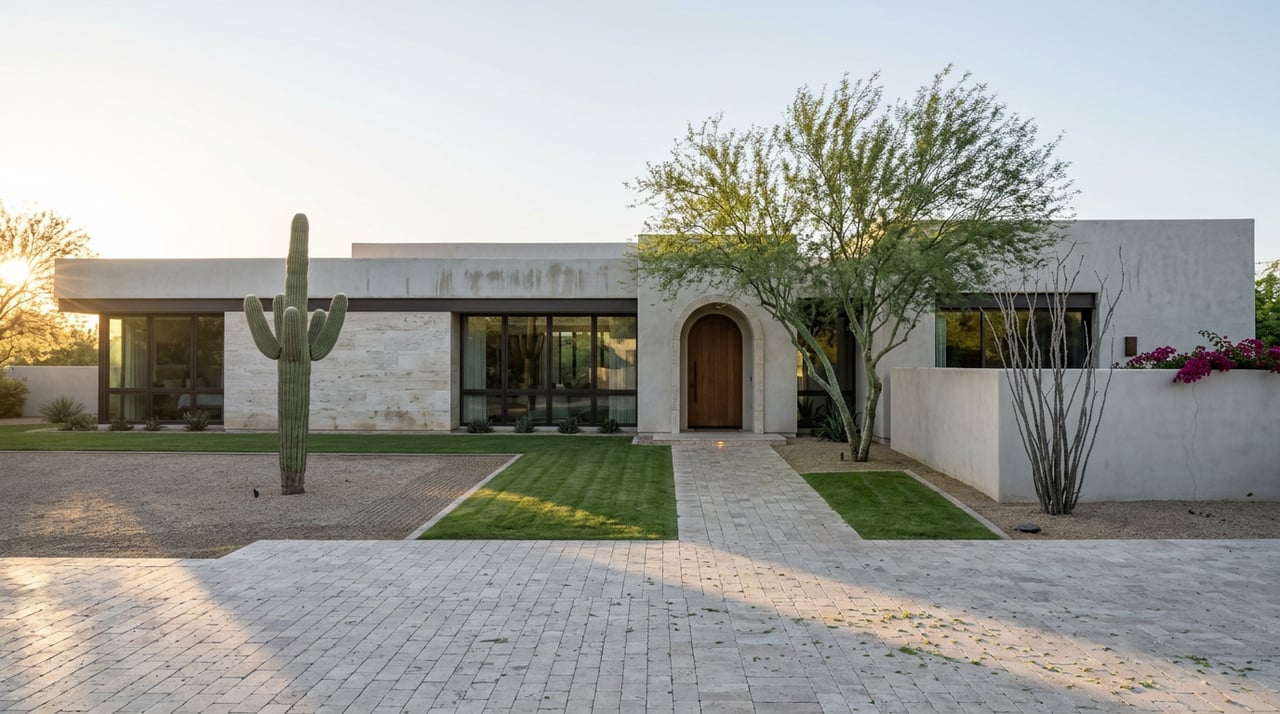
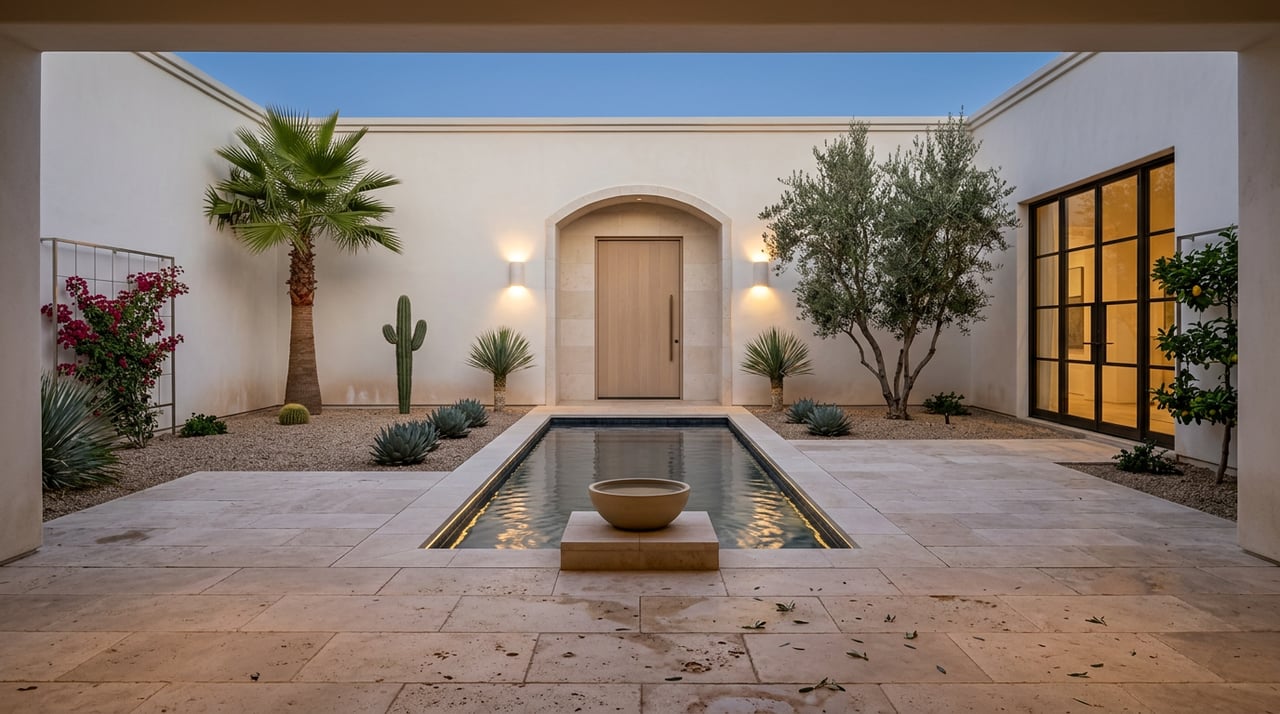
Paradise Valley is a custom‑estate market. Expect Mediterranean and Spanish inspirations, contemporary desert modern architecture, and homes that integrate outdoor spaces, courtyards and panoramic glazing. New builds tend to be bespoke, with a strong emphasis on privacy, siting and landscape.
Daily convenience and lifestyle
Arcadia tends to be more convenient for daily errands. Pockets near 44th Street, Camelback and Indian School place you close to cafés, brunch spots and independent shops, with some blocks offering moderate walkability. The vibe is neighborhood‑centric and social.
Paradise Valley clusters its commercial activity in a handful of resorts and private amenities. Most shopping and dining are a short drive to Scottsdale or the Camelback/Biltmore corridors. Zip‑level indicators reflect this car‑oriented pattern; check the Walk Score for 85253 to get a feel for typical mobility.
Schools and address checks
Many addresses in both Arcadia and Paradise Valley are served by the Scottsdale Unified School District (SUSD), with Arcadia High School anchoring the neighborhood’s public high school option. Attendance boundaries are address‑specific and can change, so verify the exact school assignment for any property you’re considering. Start with SUSD’s district overview at Scottsdale Unified School District.
Market snapshot and price bands
Prices reflect the lifestyle and lot patterns in each area.
- Arcadia: A January 2026 brokerage neighborhood report placed the median sale price around 1.56 million dollars. Actual values vary by micro‑location, home size and whether the property is an original ranch or a new custom build.
- Paradise Valley: Recent summaries show median single‑family prices commonly in the 3.2 to 3.6 million dollar range, with many estate‑class properties trading well above that depending on lot, views and architecture. For a current, high‑level view, see PropertyFocus’s market summary for Paradise Valley.
Market conditions move quickly, especially in the ultra‑luxury band. Request a personalized MLS snapshot before you write an offer or list your home.
Taxes and ongoing costs
Arizona uses a Limited Property Value (LPV) system with assessment ratios that help smooth year‑over‑year changes in taxable value. Your parcel’s LPV and local tax rates determine the bill. Because Paradise Valley homes are generally higher in value, annual property taxes tend to be larger in dollar terms, even if effective rates are similar to Arcadia addresses. You can review how the LPV system works in the Maricopa County Assessor’s LPV glossary.
Beyond taxes, compare annual operating costs like landscaping, irrigation and pool maintenance. An irrigated Arcadia lawn and mature trees may have different upkeep than a desert‑adapted Paradise Valley estate with expansive hardscape and multiple outdoor living zones.
Building or remodeling? Know the rules
If you plan to remodel or build, confirm which jurisdiction applies to your exact address. In Arcadia, parcels can fall under the City of Phoenix or City of Scottsdale, and some blocks sit within the Arcadia Camelback Special Planning District that guides height, setbacks and lot coverage. Start with the City of Phoenix zoning ordinance, Chapter 6 to understand overlay rules.
In Paradise Valley, the town’s policies favor large lots, low lot coverage and view protection, and hillside properties can trigger additional standards. Review the Town of Paradise Valley General Plan and request a preliminary feasibility check before you commit to a design or timeline.
Which setting fits you? A quick checklist
- You prefer walkable dining and quick errands: Focus on Arcadia blocks near 44th Street, Camelback and Indian School. Visit at different times of day to test traffic, parking and noise.
- You want privacy, space and mountain views: Paradise Valley’s one‑acre pattern is built for estate‑style living. Walk the site to study sight lines, sun angles and neighboring envelopes.
- Schools are a top priority: Confirm the address‑specific public school assignment through SUSD and consider travel times to any private schools you’re evaluating.
- You plan to renovate or build: Identify the governing jurisdiction and any overlays. Ask for a zoning and permit timeline estimate before you set construction targets.
- You’re weighing long‑term costs: Pull the most recent property‑tax bill and LPV data, then budget annual operating costs for landscaping, irrigation and pool care to compare apples to apples.
Next steps
Both Arcadia and Paradise Valley deliver the Camelback lifestyle, just in different flavors. If you value a neighborhood rhythm with café culture and classic ranch charm, Arcadia shines. If you’re seeking a private retreat with room to breathe and resort‑level amenities, Paradise Valley leads. The best choice starts with your daily priorities and the nuances of a specific block.
If you want a calm, data‑driven path to the right address, let’s talk. With hands‑on advisory, design‑sensitive staging and deep local knowledge, we’ll help you move with confidence. Connect with Adrian Heyman to schedule a private consultation.
FAQs
What is the biggest difference between Arcadia and Paradise Valley lots?
- Arcadia lots commonly range from about 6,000 to 10,000 square feet in many pockets, while Paradise Valley typically follows a one‑home‑per‑acre pattern emphasizing privacy and views, as outlined in the Town’s General Plan and supported by Arcadia micro‑market data from Listalysis.
Is Arcadia in Phoenix or Scottsdale, and does that affect permits?
- Arcadia spans both cities, and certain blocks fall under a Special Planning District that can guide setbacks and coverage. Always verify the governing jurisdiction and any overlays through the City of Phoenix zoning ordinance, Chapter 6 and neighborhood context on Arcadia’s overview page.
How walkable is Paradise Valley for daily errands?
- Paradise Valley is primarily auto‑oriented due to large lots and limited commercial zoning; residents typically drive to nearby Scottsdale or the Camelback/Biltmore areas for shopping and dining. Check the Walk Score for 85253 for a zip‑level snapshot.
Which public schools serve Arcadia and Paradise Valley addresses?
- Many addresses feed into the Scottsdale Unified School District (SUSD), including Arcadia High School for the neighborhood. Boundaries are address‑specific, so confirm assignments with SUSD.
How are property taxes calculated in Maricopa County?
- Arizona uses a Limited Property Value (LPV) system with assessment ratios to determine taxable value, which helps limit annual swings. Review the mechanics on the Maricopa County Assessor’s LPV page.