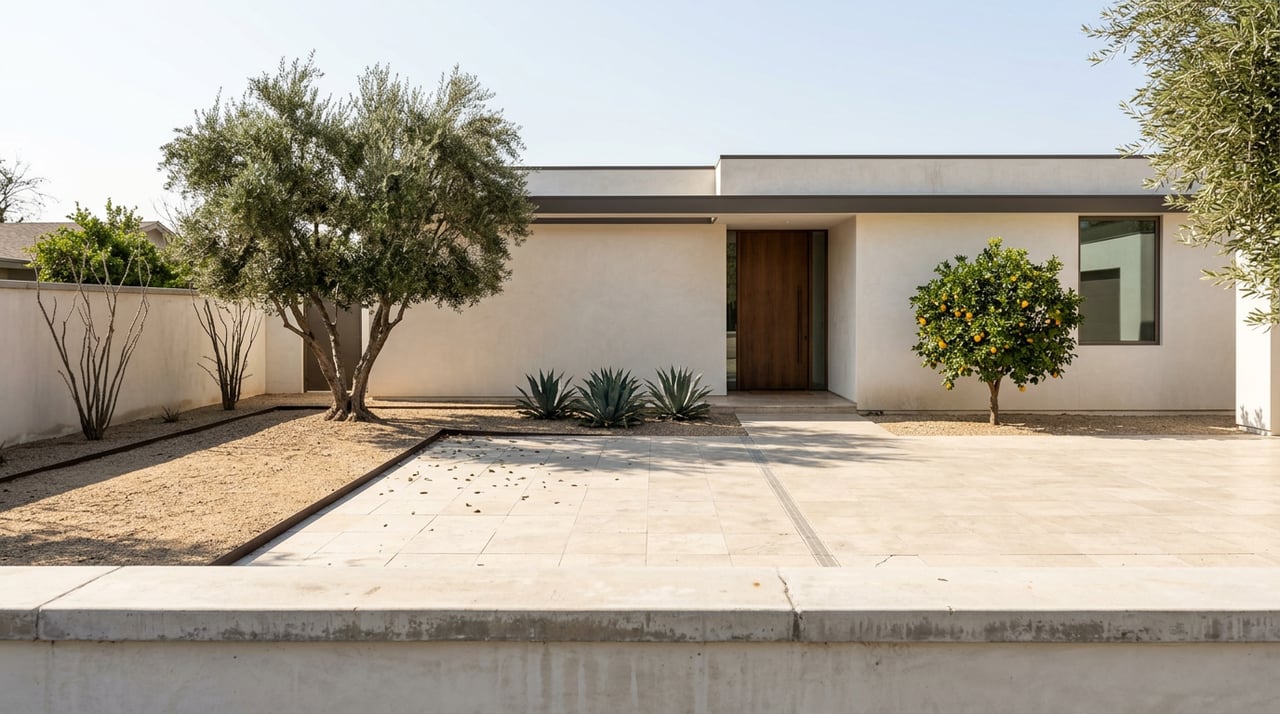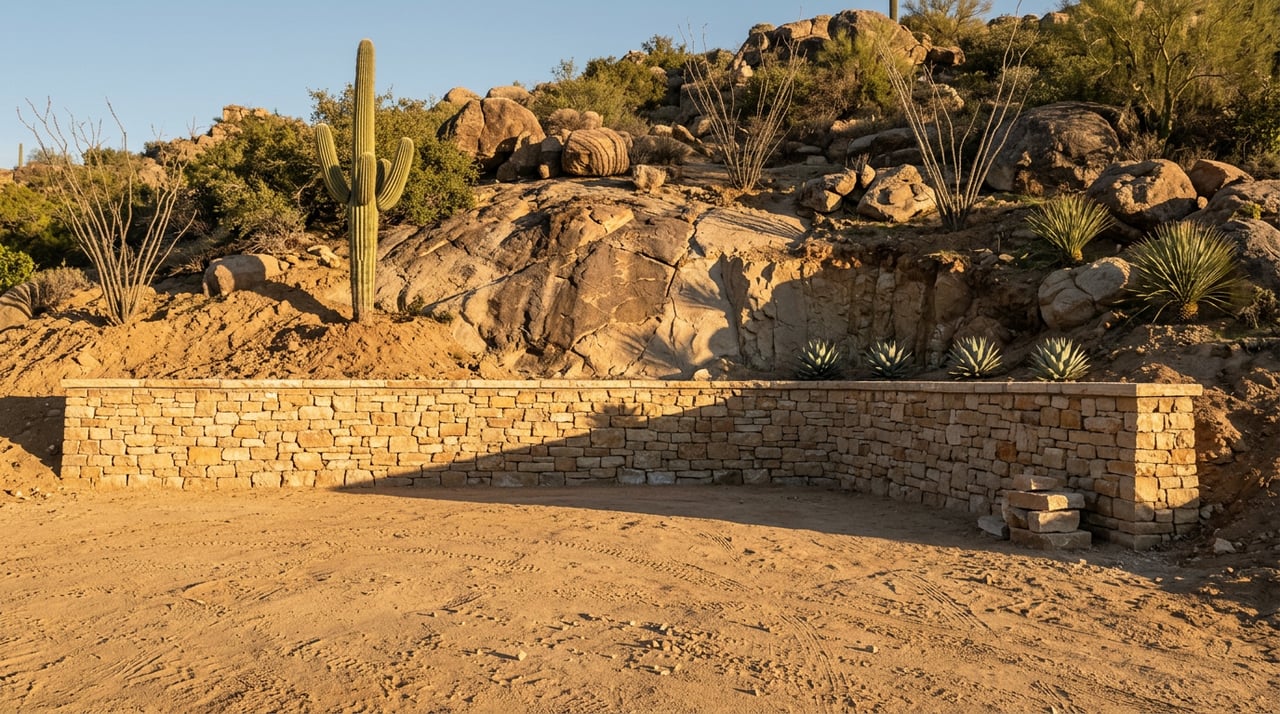
Two lots came up in the same month this year. One sat on two acres in the Mummy Mountain foothills, priced in the mid seven figures, with the kind of view that sells itself before the agent finishes the sentence. The other sat on a half acre near Lincoln Drive, flat, unremarkable, priced for a fraction of the per-acre cost of the mountain parcel. On paper, the mountain lot looked like the better buy. Once the slope analysis came back, the math flipped.
That is not a fluke of one parcel. It is how Paradise Valley's Hillside Development Regulations are built to work, and it is the fact most buyers comparing lots by acreage alone do not learn until they are already attached to a view.
The number that actually governs the lot
Paradise Valley treats any parcel with a natural slope of 10 percent or more as hillside terrain, reviewed under Article XXII of the Town's Zoning Ordinance and administered by the Hillside Building Committee. The rule that decides what you can build is the cap on disturbed area, meaning how much of the natural ground can be graded, cut, filled, cleared of vegetation, or trenched, expressed as a percentage of the site.
According to Jematell Homes' Paradise Valley hillside requirements guide, that cap falls fast as the slope steepens:
| Building-site slope | Maximum disturbed area |
|---|---|
| 10% | Up to 60% |
| 15% | About 34% |
| 25% | About 13% |
| 50%+ | Single digits |
A single wash running through an otherwise flat two acres can pull the whole parcel into this table, even if most of the lot reads as buildable to the eye. Once it does, acreage stops predicting house size. Slope does.
The Town states its purpose for the rule plainly: the hillside regulations exist to control the intensity of development, protect the hillside environment, and provide for the safety and welfare of the Town and its residents. It is administered parcel by parcel, by a six-member committee made up of three residents appointed by the Council and three rotating Planning Commissioners, and it does not bend for a good view.
The height math that catches people after they clear the slope test
Passing the disturbance table does not mean a buyer is clear. According to Fenn Rogers' Paradise Valley building cost guide, hillside lots carry a 24-foot height limit measured from finished grade at each point of the building, not from one reference elevation. On a lot that drops 15 feet from front to back, that plane calculation can shrink what looked buildable on a survey into something considerably smaller once an architect runs the numbers.
Flat lots are not exempt from surprise either. Non-hillside parcels can carry a separate height-plane test. It is a second calculation, distinct from the base height limit, and easy to miss if a buyer's team only checks the code's headline number.
The comparison turns on the hillside limits: how much ground a parcel can touch, and how tall it can rise once it does.
What the difference actually costs
None of this stays abstract once a buyer starts pricing construction. On a flat lot near Lincoln Drive, site work and foundation typically run around 10 to 12 percent of total project cost. On a hillside parcel where crews are drilling piers into granite and building multi-tiered retaining walls, that same category can climb to 25 to 30 percent, based on current Paradise Valley building cost breakdowns from mid-2026. On an eight-figure custom build, that gap is the difference between one very good kitchen and two.
Timeline moves the same direction. Flat lots without HOA design review can move through permitting in a season or two. Hillside lots, layered with Hillside Building Committee review, a separate Board of Adjustment track for any variance, and often geotechnical and drainage review on top of standard permitting, routinely run past 30 months from closing to occupancy. Raw hillside land itself trades at a real premium for the privilege. Current listings put Paradise Valley land at roughly $1.5 million to $5 million or more per acre depending on location, view corridor, and slope, with the steepest, most view-forward parcels commanding the top of that range regardless of what the final building envelope turns out to be.
The public review process in practice
The review is not a formality, and it is not always quiet. As Rose Law Group Reporter reported, a hillside variance request on a Mummy Mountain lot once prompted organized public comment at a Board of Adjustment hearing, with residents showing up to voice concerns over a proposed 6,300 square foot home. The board issued a continuance rather than a ruling on the spot. That is one example of how the review process can unfold when a variance request draws public comment. It is also why buyers evaluating a hillside parcel with any ambition beyond a modest footprint should treat a Hillside Building Committee pre-application as a required early step, not a courtesy.
The conservation easement lever some owners use
Not every hillside owner fights the disturbance table. Some work with it directly. The Paradise Valley Mountain Preserve Trust, a nonprofit founded in 1997 to protect Mummy Mountain, Camelback Mountain, and the adjoining Phoenix Mountain Preserve land within Town limits, now holds more than 260 acres under permanent conservation, much of it donated or placed into easement by hillside property owners themselves. A conservation easement can limit development on a portion of a parcel, and potential tax benefits depend on individual circumstances and are best reviewed with a tax professional before committing; for an owner who was never going to build into the steepest third of a lot anyway, it may be worth exploring that option.
What this means if you are comparing lots
The lesson is not that hillside lots are a bad buy. Clearwater Hills and the other gated enclaves on Mummy Mountain's slopes exist because the view and the privacy are worth the process to buyers who want them. The lesson is that a listing's acreage tells you almost nothing about buildable house until someone runs the slope. Two lots at the same price, in the same Town, a mile apart, can come with a six-figure gap in site costs and a year or more gap in how long a buyer waits to move in.
Before falling for a view, get the topographic survey and a slope analysis first. Ask whether the parcel has already been through a Hillside Building Committee pre-application, and if it has not, budget the time for one before assuming the number on the listing sheet is the number that matters.
Frequently Asked Questions
Does a lot need to look steep to trigger hillside review? No. A single wash or a section of terrain at 10 percent slope or more can pull an otherwise flat-looking parcel into Article XXII review, even if most of the lot appears buildable at a glance.
Can a hillside lot still support a large custom home? Often yes, but the achievable size depends on where the buildable disturbance area lands relative to the height-plane math, not on total acreage. A pre-application review with the Hillside Building Committee is the fastest way to find out before making an offer contingent on a design that may not fit.
Is a flat lot automatically the easier build? Not always. Some flat parcels still carry their own height-plane test, so a buyer assuming a flat lot has no special math can still be surprised at plan check.
If you are comparing lots on Mummy Mountain, the Camelback Mountain slopes, or the flatter parcels near Lincoln Drive, Heyman Luxury can walk the site with you before you write an offer. Schedule a Private Consultation and get a clear read on what a specific parcel can actually build, not just what it looks like it should.
This article is general information, not legal, tax or financial advice. Consult a qualified professional about your situation.