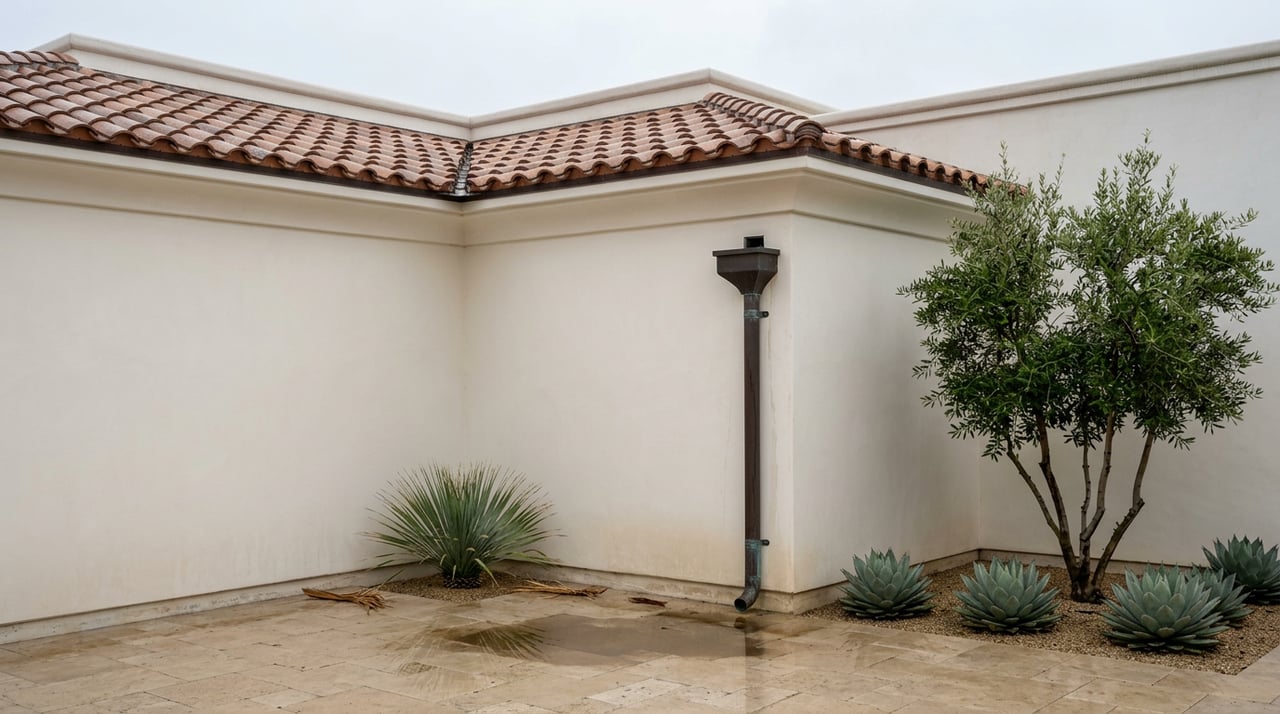
What happens if the roof you told a buyer was sound starts leaking three weeks before closing?
It is not a hypothetical this month. Arizona's 2026 monsoon season runs through September 30, and Paradise Valley is still inside its peak window for hail and wind, which typically stretches from March through August. A flash flood warning covering Phoenix, Scottsdale, and Paradise Valley was issued in mid-July, and the broader Valley's 2025 season followed a pattern worth remembering: a quiet start followed by the most damaging storms in the final third of the season, with tropical storm remnants still dropping rain into October. If you list an estate in Paradise Valley right now, the standard 30 to 45 day escrow will run through the last weeks of an active monsoon season, not after it. That timing, more than the storm itself, is what creates most of the disclosure risk sellers don't see coming.
The disclosure duty doesn't end when you sign it
Arizona's Seller's Property Disclosure Statement, the SPDS most buyers and agents rely on, runs to nine or ten pages and asks pointed questions about roof condition, prior leaks, and repair history. Sellers answer based on what they actually know. But the obligation doesn't freeze the moment you sign. If a roof starts leaking after you've delivered your disclosure statement but before you close, Arizona law requires you to update the buyer. Selling as-is doesn't change this. As-is affects who pays for the fix, not what you're required to say about it.
There's a second layer sellers often forget. Under the standard Arizona Residential Resale Purchase Contract, sellers must deliver a five-year insurance claims history to the buyer within five days of contract acceptance. That report surfaces past storm claims whether or not a seller mentions them elsewhere on the SPDS. In practice, this means the disclosure conversation isn't something a seller controls by being vague. The paperwork tells the story on its own timeline.
Same storm, different street
Paradise Valley sits in a natural funnel between Camelback Mountain and Mummy Mountain, and that geography concentrates monsoon energy unevenly. Two estates a few streets apart, hit by the same storm cell, can come away with entirely different damage depending on how the wind moved between the peaks. This isn't an abstraction. Storm-tracking data for the area shows roughly a dozen confirmed severe weather events within ten miles of Paradise Valley since August 2024, including large hail reports and multiple flood events. Named communities across town, from Clearwater Hills and Finisterre to Cheney Estates and Mummy Mountain Park, sit in different wind paths from that same funnel, and the older housing stock concentrated along McDonald Drive and Lincoln Drive carries its own separate exposure simply by virtue of age.
That older stock matters more than it looks. Homes built before 2005, common along those corridors, are the ones most likely to be carrying underlayment that has quietly outlived its expected life.
Why the tile can look fine and still be the problem
Manufacturer ratings put roofing underlayment life at 25 to 30 years. In Paradise Valley's UV and heat, real-world performance runs closer to 15 to 20 years, and south- and west-facing slopes degrade faster than the rest of the roof. Intact tile is not a reliable signal that the underlayment beneath it is still doing its job. A roof can pass a casual walk-through, get listed, and go under contract, and then fail in exactly the way an August storm tests it: from beneath, where nobody was looking.
That's the sequence that turns a routine sale into a disclosure scramble. Not a dramatic storm everyone sees coming, but a slow underlayment failure that finally shows itself the week a buyer's inspector happens to be in the attic, or the week after a monsoon cell parks over Mummy Mountain.
What repair actually costs if it surfaces mid-escrow
If a roof issue does turn up during escrow, the number attached to it depends heavily on scope. For context, here's what repair typically runs on a 4,000 to 6,000 square foot estate:
| Repair Scope | Typical Cost Range |
|---|---|
| Clay tile replacement | $25,000 – $50,000 |
| Concrete tile replacement | $18,000 – $35,000 |
| Underlayment-only renewal (tile lifted and relaid) | $12,000 – $22,000 |
These are the numbers a seller and buyer end up negotiating over when a leak surfaces late. Credit at closing, price adjustment, or repair before close, the range above is the starting point for that conversation, and it's a wide enough range that both sides usually want a written estimate before agreeing to anything.
What actually happens if it fails mid-escrow
- Document the damage immediately, with photos, before any repair work starts.
- Notify your agent and the buyer's side promptly. This is now a required disclosure amendment.
- Get a written estimate from a licensed roofer rather than relying on a visual guess.
- Decide with your agent whether repair before closing, a credit, or a price adjustment makes sense given the timeline.
- If the estate sits inside a gated community like Clearwater Hills, Finisterre, or Cheney Estates, the community's Architectural Review Committee has to approve the material, profile, and color of any exterior repair before work begins. That approval step can add days a nervous buyer is already watching closely.
That last step is the one most sellers forget to plan for. An ARC review that would be a minor formality on a normal renovation timeline becomes a real bottleneck when a buyer's financing contingency has a fixed date attached to it.
A roof inspection before you list isn't extra diligence. It's the only way to keep a monsoon storm from renegotiating your price on someone else's schedule.
Getting ahead of it
The estates that move through escrow cleanly during monsoon season tend to be the ones where the roof question was answered before the home ever hit the market, not during the anxious middle of a transaction. A pre-listing inspection with a written report gives you an answer to put on the SPDS with confidence, and if underlayment age is a question mark on a pre-2005 property, it's worth resolving before a buyer's inspector finds it for you.
If you're weighing a fall listing in Paradise Valley and want a clear-eyed read on what a buyer's team will flag, Adrian Heyman works through exactly this kind of preparation with sellers before a home goes live, coordinating trusted local inspectors and building the disclosure conversation into the marketing timeline rather than leaving it for escrow to surface on its own. Schedule a private consultation to talk through your specific property and timeline.
Frequently Asked Questions
Does Arizona require a professional roof inspection before I list my home? No. Arizona doesn't mandate a pre-listing inspection, but the SPDS asks specific questions about roof condition and history. A written estimate from a licensed roofer gives you a documented answer instead of a guess, which matters if timing gets tight.
If I already repaired storm damage years ago, do I still have to mention it? Yes. A past repair remains disclosable even if it was done correctly and the roof has performed fine since. Buyers are entitled to the history, not just the current condition.
Can listing my home as-is get me out of these disclosure requirements? No. Selling as-is means you won't make repairs before closing. It doesn't change your obligation to disclose what you know about the property's condition, including anything that changes between signing the SPDS and closing.