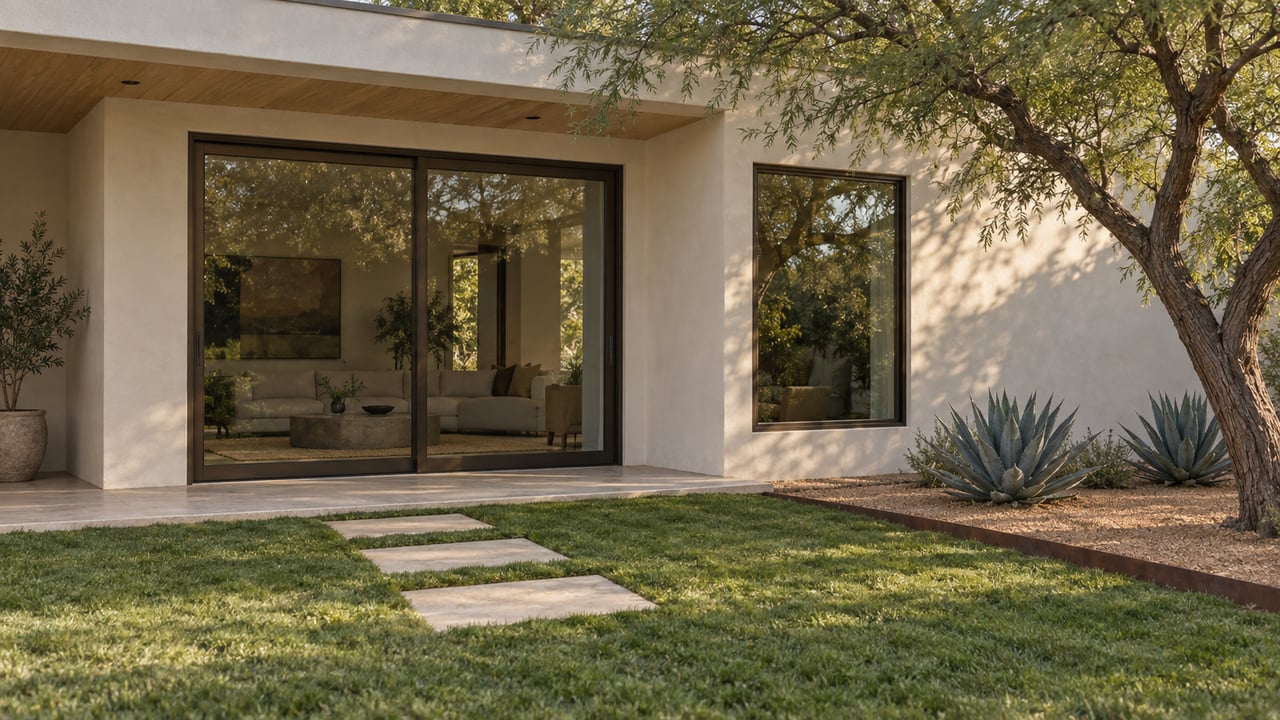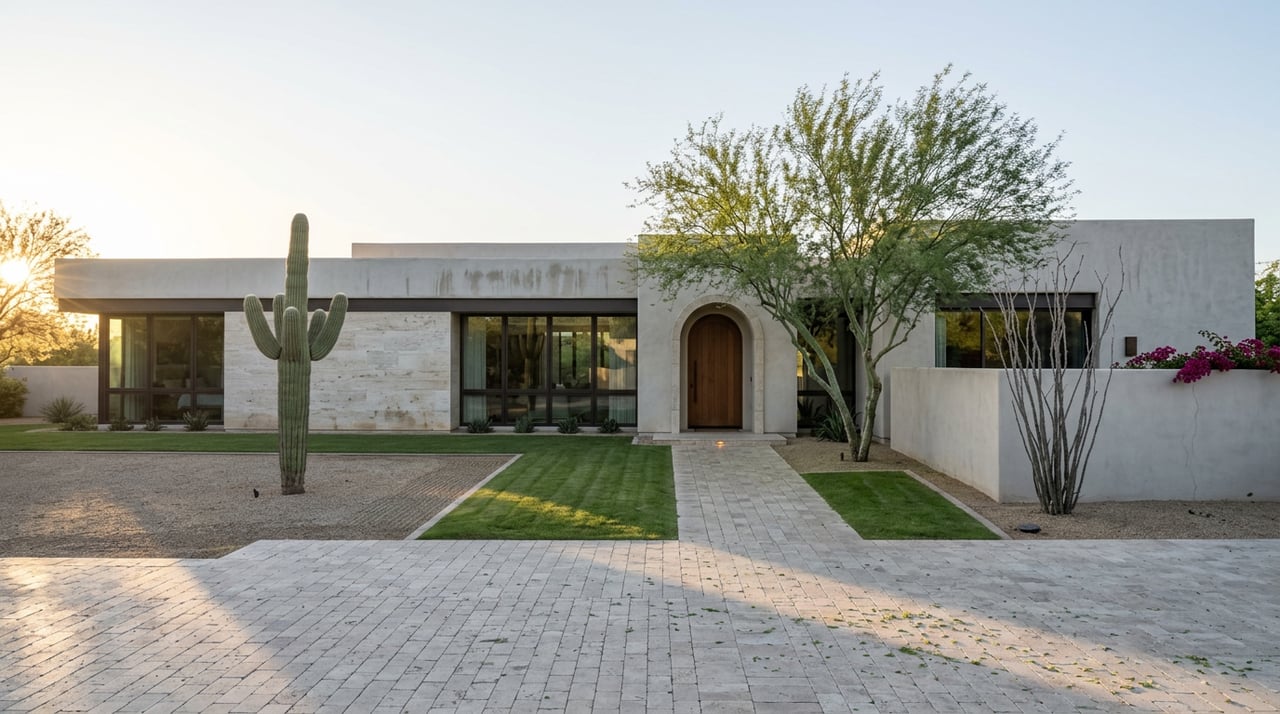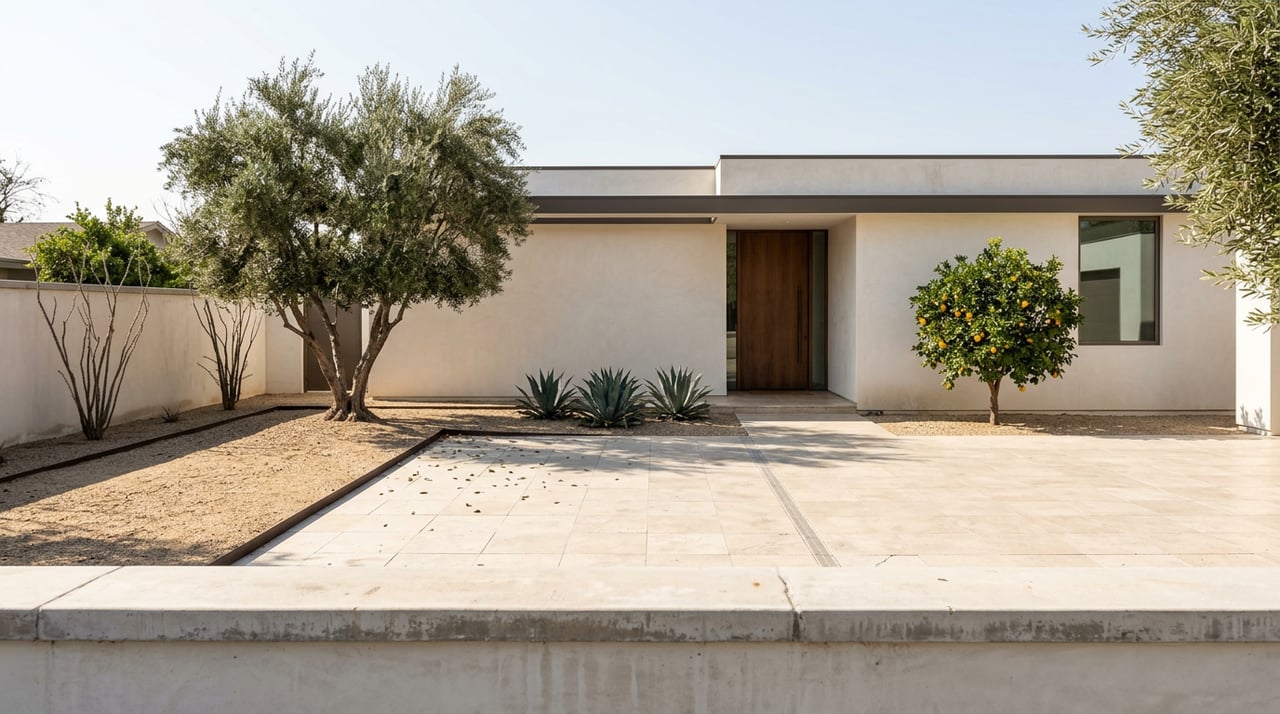
Two houses sit across the street from each other in Paradise Valley. Same block, same one-acre zoning, same view of Mummy Mountain in the distance. One home's wastewater flows to a City of Phoenix treatment facility. The other's flows through a system the Town of Paradise Valley owns but has handed over to the City of Scottsdale to run. A third house two doors down has neither. It has a septic tank.
None of this shows up on the listing photos. None of it shows up in the price per square foot. It shows up, if it shows up at all, when a buyer's inspector starts asking questions the seller assumed had one obvious answer.
Paradise Valley does not have a single sewer system. It has three answers to the same question, and the Town's own utility page confirms the split plainly: the southwest and northwest portions of town are served by City of Phoenix Water Services, which owns and operates those wastewater facilities directly, while the rest of the town is served by a system the Town owns but that is operated and maintained by the City of Scottsdale under an intergovernmental agreement. Layered on top of both is a real share of parcels, concentrated in the town's older and hillside pockets, that were never connected to either system and run on private septic instead.
One Zip Code, Three Utility Answers
For a buyer moving from almost anywhere else in the Valley, "sewer or septic" is a yes or no question with an obvious answer once you know the address. In Paradise Valley, knowing the address only tells you which of three possible answers you need to chase down. The Town's utility page is explicit that the wastewater from its own service area either pumps to Scottsdale's Water Campus or flows by gravity into the regional interceptor system that eventually reaches the 91st Avenue treatment plant, a detail that matters less for its own sake than for what it implies: even the sewer bill for a Paradise Valley home might arrive from a city the homeowner doesn't live in.
Here's the practical breakdown of who you'd actually be calling, depending on which system serves a given parcel.
| System | Who owns and operates it | What it means for you |
|---|---|---|
| City of Phoenix service | City of Phoenix Water Services, owned and operated directly | Billing, account transfer, and outage questions go to Phoenix |
| Town system (majority of PV) | Owned by the Town, operated under contract by the City of Scottsdale | Same town address, but service calls and billing route through Scottsdale |
| Private septic | Owned and maintained by the property owner | No municipal bill at all, but a state inspection requirement kicks in at every sale |
A general home inspector will check whether the toilets flush. Confirming which of these three answers applies to a specific parcel, and whether the paperwork behind it is current, is a separate step, and it's one that gets skipped more often in a market where most of the conversation is about square footage and finish level.
Septic Doesn't Disappear Because the House Costs $8 Million
The assumption that septic is a starter-home problem does not hold up in Paradise Valley. The town's own hillside and estate corridors, the Camelback Country Estates and Cherokee Elementary corridor among them, are exactly where older large-lot construction and septic systems overlap most often. These are not fringe addresses. They sit inside a school attendance zone considered one of the most desirable in the state, on lots that were platted before either municipal wastewater system reached that far.
Camelback Mountain itself illustrates how granular this gets. The north slope, on the Paradise Valley side, falls under the Town's own hillside ordinance. The south slope, facing Arcadia, falls under a separate City of Phoenix hillside ordinance. Two estates on the same mountain, both commanding views in the eight figures, can be governed by different building authorities and, just as easily, served by entirely different utility arrangements. A parcel in the guard-gated enclaves of Clearwater Hills or Judson Estates might sit on Town sewer. A comparable lot a quarter mile away in an older, ungated section might still be running on a septic tank installed decades before either city extended a pipe that far up the hillside.
None of this is a defect. Septic systems, properly maintained, are common and unremarkable across large swaths of Arizona. The issue isn't the system itself. It's the assumption that a $5 million or $10 million price tag automatically means municipal infrastructure, an assumption that has nothing to do with what actually happened when a subdivision was built forty or fifty years ago.
The Six-Month Clock and the Fifteen-Day Deadline
Arizona does not leave this to chance. Under Arizona Administrative Code R18-9-A316, any property served by a septic tank or an alternative onsite wastewater system triggers a mandatory transfer inspection whenever ownership changes hands. The seller is responsible for hiring a qualified inspector, someone holding an Arizona engineering or sanitarian license, or a licensed septic pumper, or specific categories of licensed contractor, to complete the inspection within six months before the closing date. That inspector fills out a Report of Inspection and hands it to the seller, who is then required to give it to the buyer before the sale closes.
The clock doesn't stop at closing. Once ownership transfers, the buyer has fifteen calendar days to file a Notice of Transfer form along with a fifty dollar fee with the appropriate agency, depending on when and where the system was originally permitted. Miss either half of that sequence and you're not dealing with a minor paperwork gap. You're dealing with a state requirement that the Arizona Department of Environmental Quality has stated plainly takes precedence over any conflicting terms that might exist in a purchase contract.
For a home that has never left the family in twenty or thirty years, gathering that documentation from scratch, locating the tank, confirming its capacity, and getting it inspected and possibly pumped, is not something you want discovered during a thirty day escrow window. Inspection costs for a system like this typically run from modest fees up into several hundred dollars, and pumping adds several hundred more depending on tank size and how accessible it is. Those numbers are small next to an eight-figure sale price. The disruption they cause when they surface late is not.
Why 2026 Turns This Into Leverage, Not Trivia
None of this friction is new. What has changed is how much room today's buyers have to act on it. Paradise Valley's active single-family inventory climbed sharply through the first half of 2026, reaching roughly 431 listings in the 85253 zip code by June, up close to 42 percent from April's count. With the town holding only about 5,800 total households, that put close to seven percent of every home in Paradise Valley on the market simultaneously, a share that public market data through the spring and early summer of 2026 described as unusually high for this town's history.
Days on market moved in the same direction. Figures through spring and early summer 2026 put average time on market for Paradise Valley single-family homes anywhere from roughly 70 days on the faster end to well over 100 on the slower end, depending on the exact data window and price tier, with the higher end concentrated in the $5 million-plus segment where the buyer pool narrows fastest.
Put those two facts together and the picture is a market where buyers have more homes to compare and more time to sit with a decision than they've had in over a year. A buyer with options and patience is a buyer who reads an inspection contingency closely. An undocumented septic system, or an unclear answer to which municipality actually serves a given address, is precisely the kind of soft spot that a more selective 2026 buyer now has both the leverage and the runway to use, whether that means a price reduction, a seller credit, or walking during the inspection period entirely.
Before You List, or Before You Write the Offer
- Check the sewer bill, or the absence of one. If there's no sewer bill on file, the home is very likely on septic, and that alone triggers the state inspection requirement.
- Confirm which agency actually serves the address. The Town's own sewer provider map shows the boundary between City of Phoenix service and the Scottsdale-operated Town system, and it is worth five minutes to check rather than assume.
- If septic is confirmed, locate the tank, the permit history, and any prior pump receipts before you're under contract, not after.
- Book the transfer inspection early. The six-month window before closing is generous, but only if you start the clock with enough runway left in escrow.
- Budget for the fifty dollar Notice of Transfer fee and file it within fifteen calendar days of closing. It is a small requirement, and it is not optional.
- For hillside and older estate-corridor properties specifically, don't assume the neighbor's utility setup mirrors yours. Confirm it parcel by parcel.
A Paradise Valley address carries real weight. What it does not carry, automatically, is a guaranteed answer to a question buyers are now well positioned to ask before they sign anything. Getting ahead of it is not a compliance exercise. It's part of what separates a listing that closes on schedule from one that spends its final week in escrow answering a question that should have been settled months earlier.
If you're weighing a sale or a purchase in Paradise Valley and want a clear read on what a specific property's utility setup actually is before it becomes a closing issue, Heyman Luxury can walk the details with you. Schedule a Private Consultation and get the full picture before you list or write an offer.