Thinking about a home in Arcadia and curious about those grassy, tree-filled lots you see after a water delivery? You are not alone. Flood irrigation is part of Arcadia’s history and still shapes how many properties look and function today. In this guide, you will learn how flood irrigation works, what it costs, how to maintain it, and how to evaluate it as a buyer or owner. Let’s dive in.
Arcadia’s irrigation roots
Arcadia grew from former orchards supplied by the Salt River Project canal network. Many lots still have ditches, gates, or recorded irrigation easements tied to that history. You may see language in deeds or plats that references ditch rights-of-way or shared maintenance.
Responsibility for delivery and upkeep varies by property. Some features are managed by SRP or a private ditch association, while others fall to the owner based on recorded documents or neighborhood agreements. Always review your title report and ask about any ongoing assessments or obligations.
How flood irrigation works
Flood irrigation spreads water over the soil surface so it can soak into the root zone. Instead of sprinklers or drip emitters, water moves through shallow channels that carry it across the lawn or around trees.
What you may see on site
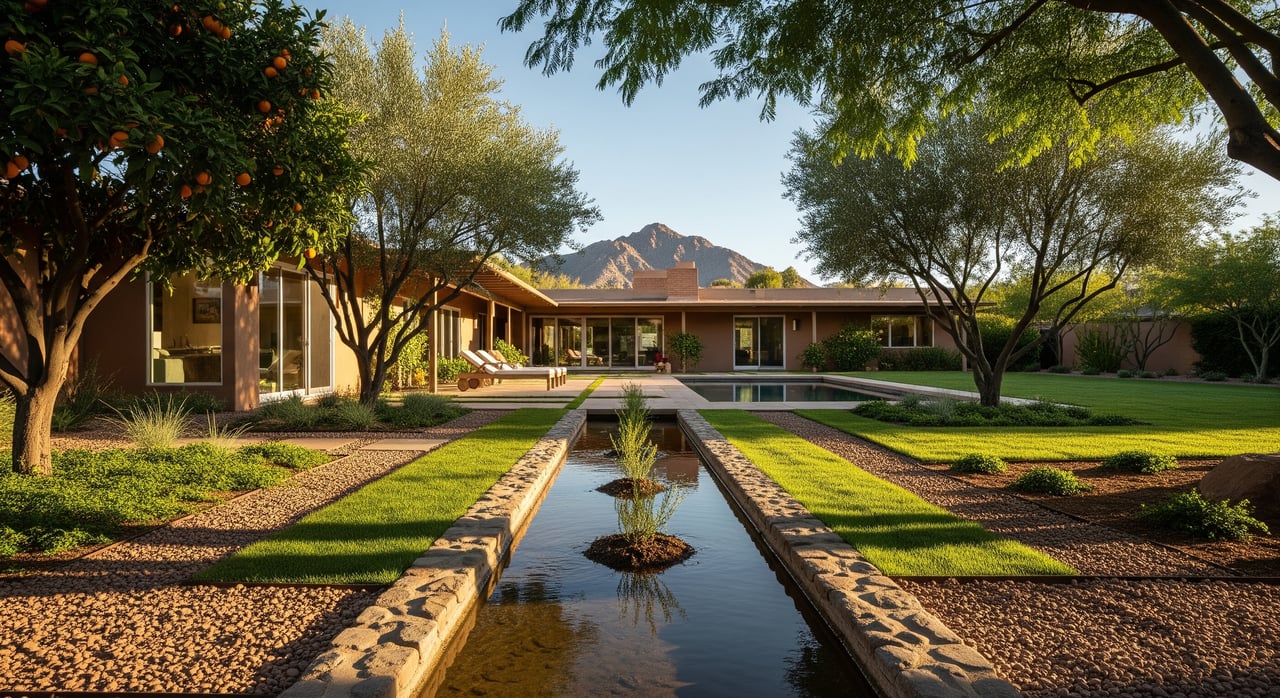
- Earthen or lined ditches along the property edge
- A small gate or concrete inlet box where water enters the yard
- Shallow furrows or channels that distribute water across turf or beds
- An overflow or outlet to carry excess water away
Scheduling basics
Flood irrigation is typically less frequent but runs longer to achieve a deep soak. The right frequency depends on soil type, plant needs, season, and delivery rotations in your area. Summer usually requires more frequent or longer applications than winter.
In historic delivery areas, timing may be coordinated with neighbors or follow a rotation set by SRP or a neighborhood ditch group. The goal is simple: apply enough water to wet the full root zone, then allow the soil to partially dry before the next cycle.
Efficiency and water use
Surface irrigation generally has lower application efficiency than drip or well-designed sprinklers. Losses can occur from runoff or water moving beyond the root zone. Good grading and careful flow control help, but plan for higher water use compared with drip systems serving the same plants.
Costs and fees to plan for
Every Arcadia property is different, so confirm details for your parcel before budgeting. Expect a mix of one-time work and ongoing costs.
One-time work
- Restoring or installing inlets, gates, or small head boxes
- Regrading or lining channels to improve distribution
- Converting flood to drip or sprinklers if you choose to switch
- Permits or coordination when modifying recorded flood features
Ongoing costs
- Delivery charges or ditch assessments if applicable to your parcel
- Routine maintenance like sediment clearing, weed control, and gate repair
- Periodic improvements such as regrading or channel lining
- Mosquito and standing-water management as needed
Who bills and why it varies
Charges can come from SRP, a private ditch company, a neighborhood association, or the city if work extends into public areas. Not all Arcadia lots receive billed surface water. Confirm service history and any assessments through title documents and local contacts.
Pros and cons for lawns and citrus
Benefits many owners value
- Character and microclimate. Mature shade and citrus create a lush setting that many Arcadia buyers appreciate.
- Deep soaking for trees. When managed well, flood irrigation delivers water to deeper roots, which can benefit citrus and other trees.
- Simple hardware. Fewer moving parts can mean fewer short-term equipment issues.
Trade-offs and risks
- Water use and efficiency. Flood irrigation often uses more water than drip or optimized sprinklers for the same plant demand.
- Maintenance. Ditches collect sediment and weeds, and gates need care.
- Standing water. Persistent ponding can invite mosquitoes and damage plants.
- Easements and neighbors. Water leaving your property can cause disputes. Know your obligations and manage flows.
Turf-specific notes
Flooding turf can work, but it depends on grading and flow control. Low spots can become soggy while higher areas stay dry. Many owners choose sprinklers for lawns and drip for plant beds for more uniform, measurable results.
Citrus-specific notes
Arcadia’s citrus legacy came from successful flood irrigation. Citrus prefer deep, infrequent watering, but do not like prolonged saturation. In desert soils, monitor for salt buildup and consider occasional leaching to flush salts below the root zone. Good drainage is key to avoiding root disease.
Maintenance and seasonal care
Routine tasks
- Clear inlets, outlets, and gates of debris and sediment
- Control weeds in channels to maintain flow and reduce mosquito habitat
- Watch for erosion and repair undercut or scoured areas
- Adjust durations to avoid prolonged standing water
- Check soil moisture and plant health to fine-tune timing
Seasonal timing
- Summer. Higher evapotranspiration means shorter intervals between irrigations or longer durations.
- Winter. Scale back frequency significantly and consider frost timing for citrus.
- Monsoon season. Coordinate to avoid deliveries when heavy rain is forecast.
Mosquito and public health
Standing water can breed mosquitoes. Maricopa County vector control encourages eliminating stagnant water where possible and using approved larvicides in persistent channels. Coordinate with neighbors and any ditch association to address shared open water.
Tools that help
- Soil probes or moisture meters to confirm wetting depth
- Simple flow timing or dye tests to see how evenly water spreads
- Periodic soil salinity checks if salt stress is suspected
Buying or selling with flood features
Flood irrigation can signal mature trees and classic Arcadia appeal. It can also come with easements, assessments, and maintenance. The best move is to verify and plan during due diligence.
Consider this quick checklist:
- Review the title report for irrigation easements or recorded rights-of-way
- Ask about service history with SRP or any local ditch company n- Confirm any assessments, delivery rotations, or shared maintenance agreements
- Inspect ditches, gates, and grading for condition and drainage
- If converting, consult on permits, easement constraints, and regrading needs
A thoughtful plan lets you preserve the landscape character while managing water and upkeep wisely.
Local contacts and resources
- Salt River Project for canal and delivery information in historic service areas
- City of Phoenix for permits, drainage, and work affecting public right-of-way
- Maricopa County Vector Control for standing water and mosquito guidance
- University of Arizona Cooperative Extension for citrus care, irrigation scheduling, and salinity
- Local ditch companies or neighborhood associations for rotations and assessments
- Licensed landscape or irrigation contractors for design and conversions
Ready to evaluate a specific property or prepare a listing with flood-irrigated landscaping? Let’s talk about strategy, disclosures, and the best path for presentation and long-term care. Connect with Adrian Heyman to align your plan with your goals.
FAQs
What is flood irrigation in Arcadia and how is it different?
- Flood irrigation uses surface water distributed through ditches and channels to soak soil, while drip and sprinklers deliver metered water through pipes and emitters for higher efficiency.
How do I find my irrigation schedule or easement in Arcadia?
- Check your deed, plat, and title report for irrigation easements, then contact SRP or any local ditch company to confirm service history and rotations.
What costs should Arcadia homeowners budget for flood irrigation?
- Expect possible delivery or ditch assessments, routine maintenance like sediment and weed control, and occasional repairs or regrading; charges vary by parcel and provider.
Is flood irrigation good for citrus and lawns in Phoenix?
- It can work well for citrus with deep, infrequent cycles and good drainage; turf can be irrigated by flooding if grading is smooth, but sprinklers often provide more uniform coverage.
Can I switch from flood to drip or sprinklers in Arcadia?
- Yes, but you must address easements, drainage, permits, and any ditch-company rules; professional design helps ensure compliance and proper grading.
How do I manage mosquitoes with flood irrigation?
- Avoid standing water, maintain clear flow paths, and consult Maricopa County vector control on approved larvicides or shared-channel solutions with neighbors.